Auditorium Acoustic Treatment Project
Date: 17/06/2026 Categories: News
Technical Proposal & Material Estimate
I. Project Overview
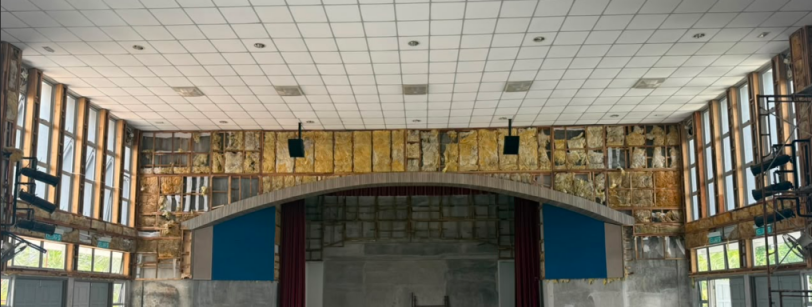
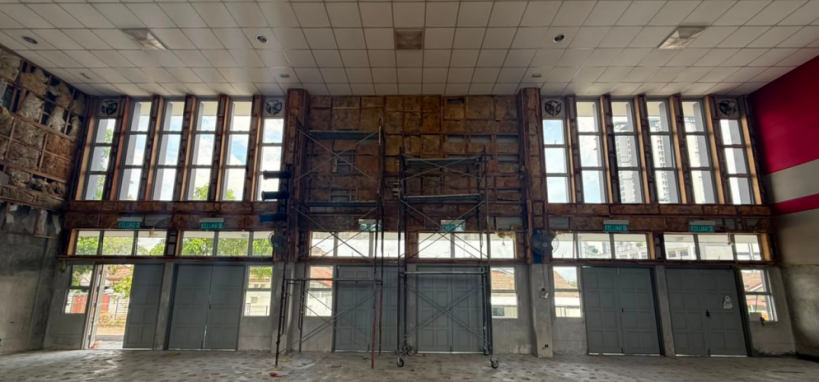
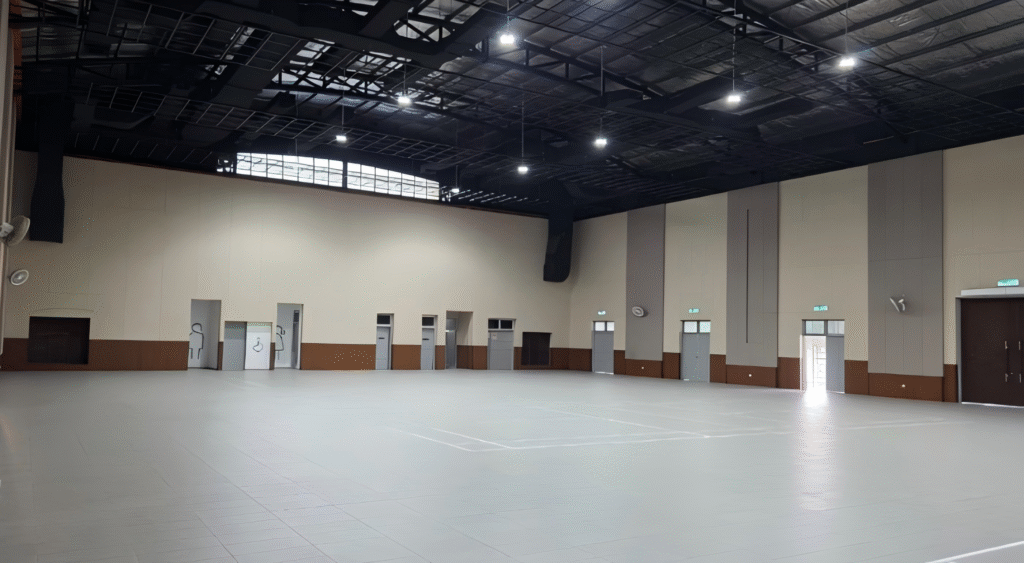
This project involves the acoustic renovation of an auditorium currently under construction or refurbishment. Based on site measurements, the auditorium has a height of 6,566 mm and a length of 22,800 mm.
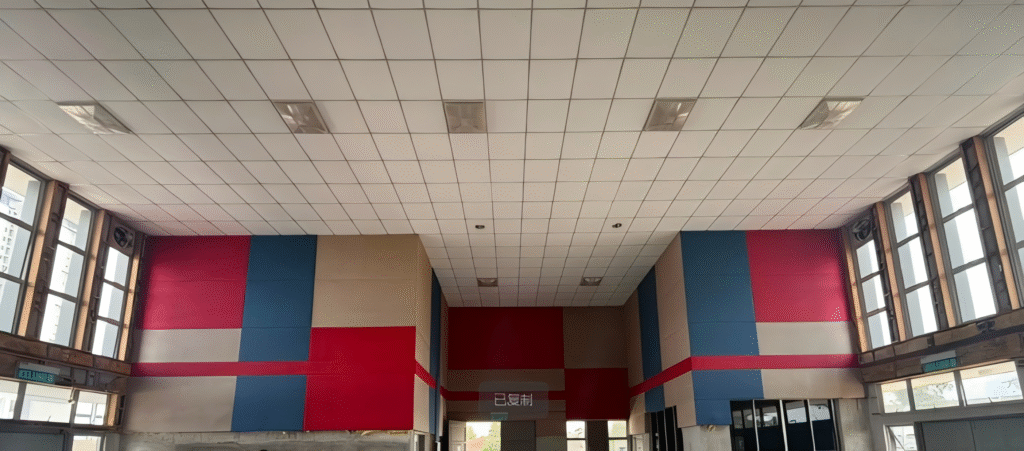
To improve speech clarity and reduce sound reflections, acoustic treatment is proposed for the stage area, rear wall, and other key reflection surfaces throughout the auditorium.
II. Main Treatment Areas
Based on site measurements and drawings, the following areas are recommended for acoustic treatment:
| Area | Estimated Treatment Area |
| Stage Arch Area | 43.20 m² |
| Stage Side Reflection Walls | 16.64 m² |
| Stage Background Wall | 31.30 m² |
| Rear Auditorium Wall & Upper Side Walls | 109.26 m² |
| Interior Stage Side Walls | 26.77 m² |
| Total | 227.17 m² |
III. Proposed Solutions
Option 1: Factory-Finished Acoustic Panels(Recommended)
The panels are manufactured and wrapped with fire-rated acoustic fabric before shipment. Only simple installation is required on site, reducing labor time and ensuring a clean, consistent appearance.
Advantages:
· Faster installation
· Better finish quality
· Reduced installation risk
· Suitable for curved and irregular areas
Option 2: On-Site Assembly
The factory supplies fiberglass boards and acoustic fabric separately. Installation and fabric wrapping are completed on site.
· Lower material cost
· Flexible for local sourcing
Considerations:
This option requires experienced installers. Improper installation may result in wrinkles, uneven joints, or reduced long-term durability.
IV. Recommendation
For this project, factory-finished acoustic panels are recommended. Although the material cost is slightly higher, installation is faster, quality is more consistent, and the overall project outcome is generally better.
For curved areas above the stage, factory-finished panels with minor on-site adjustments are strongly recommended to achieve a smooth appearance and reliable performance.
All materials should comply with Class B1 fire-retardant requirements or equivalent local standards.Report
Prepared by: Acoustic Engineering Technology Department · Date: May 25, 2026